Health and Safety Policy for West Kensington Cleaner
 West Kensington Cleaner is committed to providing a safe, healthy, and well-managed cleaning service for clients, staff, and anyone who may be affected by our work. This policy sets out the standards we follow to reduce risks, prevent injury, and support a responsible approach to every cleaning task. We aim to deliver a service that is professional, careful, and consistent, while keeping health and safety at the centre of daily operations.
Our approach is based on simple but essential principles: identify hazards early, assess the level of risk, apply practical control measures, and review working methods regularly. We expect all cleaners, supervisors, and anyone working on our behalf to follow safe procedures at all times. This applies whether the job is routine domestic cleaning, specialist cleaning, or one-off deep cleaning work.
Risk awareness is a key part of safe cleaning. Staff are expected to notice hazards such as wet floors, unstable furniture, exposed cables, broken items, sharp objects, and unsuitable storage of chemicals. When a risk is identified, it should be reported, contained where possible, and addressed before work continues. If the danger cannot be made safe quickly, the area should be left and escalated to the appropriate person.
 Before any cleaning begins, the cleaner should review the area, confirm what work is required, and consider whether any equipment or products could create additional risk. We encourage the use of careful planning to avoid rushed work and to reduce the chance of accidents. Cleaning tasks should never be carried out in a way that places the worker, occupants, or visitors at unnecessary risk.
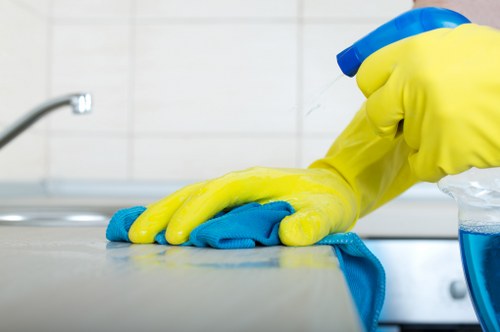
All cleaning products must be used according to the manufacturer’s instructions and stored securely when not in use. Wherever possible, products should be selected for their suitability, effectiveness, and lower hazard profile. Decanting into unlabelled containers is not permitted. Staff should wear suitable personal protective equipment when required, such as gloves, aprons, or eye protection, and should understand when additional precautions are necessary.
Manual handling is another important consideration. Lifting, carrying, pushing, and pulling can lead to strains or other injuries if done incorrectly. To reduce this risk, staff should avoid overloading containers, use correct posture, ask for assistance with awkward items, and make use of equipment designed to reduce physical strain. Any repetitive task should be managed with sensible breaks and safe working practices.
 Equipment must be maintained in safe working condition and inspected regularly. This includes vacuums, floor machines, mops, extension leads, and any tools used during cleaning. Damaged or faulty equipment must not be used. If a cleaner notices unusual noise, poor performance, frayed cables, or any sign of defect, the equipment should be removed from service immediately and reported for action.
We also place strong emphasis on personal hygiene. Staff should wash hands regularly, especially after handling waste, chemicals, or contaminated surfaces, and before eating or drinking. Cuts or abrasions should be covered appropriately to reduce the chance of infection. Where a task presents a higher hygiene concern, such as cleaning bathrooms or waste areas, extra protective measures should be followed.
Waste must be handled safely and disposed of in line with the type of material involved. Sharp items, broken glass, and contaminated waste require particular care and should never be compressed by hand. Bags should be tied securely and moved carefully to avoid spills or injury. Spills should be cleaned promptly using appropriate methods to prevent slips and maintain a safe environment.
Training is essential to the success of this policy. All staff should receive instruction on safe cleaning methods, chemical awareness, emergency procedures, and the correct use of equipment. Training should be refreshed when work methods change or when a new risk is introduced. A well-trained cleaner is better able to recognise hazards and respond in a calm, competent way.
Supervision and communication are equally important. Workers should know how to raise concerns, request support, and report incidents without delay. Near misses, accidents, and unsafe conditions should be recorded and reviewed so that lessons can be learned and future problems reduced. Open communication helps us maintain a safer workplace and improve standards across all cleaning activities.
Our policy also covers working at height where relevant. Only suitable and stable access equipment should be used, and staff must not overreach or stand on unsafe surfaces. If a task cannot be completed safely from ground level, proper equipment or an alternative method should be arranged. Safety should always take priority over speed or convenience.
 Emergencies must be handled according to clear procedures. In the event of an accident, spill, fire, injury, or exposure to a hazardous substance, work should stop immediately and the situation should be brought under control. Staff should know the basic steps for securing the area, giving first aid where appropriate, and escalating the issue so that help is obtained quickly.
We expect every cleaner to take responsibility for their own safety and the safety of others. This includes working with attention, following instructions, and refusing to take shortcuts that could create danger. A safe cleaning service depends on good judgment, steady habits, and respect for established procedures. No task is so urgent that it should be carried out recklessly.
Management is responsible for providing the resources needed to support this policy, including suitable equipment, relevant training, appropriate supervision, and regular review of working practices. The policy will be updated when new risks are identified, when equipment changes, or when improvements are needed to maintain effective standards. We are committed to continuous improvement in every part of our cleaning operations.
 In summary, West Kensington Cleaner promotes a practical and responsible approach to safety that protects people, property, and service quality. By managing hazards, using products carefully, maintaining equipment, and encouraging strong communication, we create a safer environment for all involved. This commitment applies to every job, every day, and every member of the team.